
Home / All
Blog
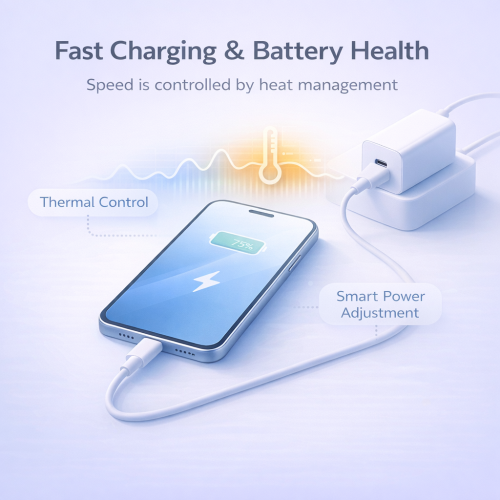
 Does Fast Charging Damage Phone Batteries Over TimeMar 3,2026This article explores whether fast charging damages phone batteries over time, explaining that heat management, charging control systems, and daily usage habits play a more significant role in battery aging than peak wattage alone.
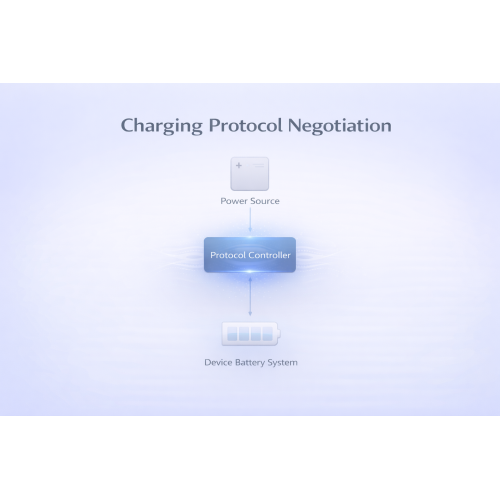
- Understanding Charging Protocol Negotiation in Simple TermsMar 2,2026This article explains charging protocol negotiation in simple terms, showing how chargers and devices communicate to determine safe voltage and current levels. It clarifies why charging speed changes during a session and how compatibility affects stability and battery health.
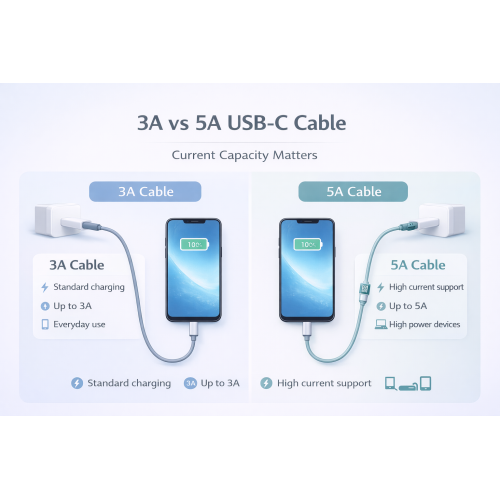
- USB-C Cable Ratings Explained: What 3A and 5A Actually MeanMar 1,2026This article explains what 3A and 5A USB-C cable ratings actually mean, how current capacity affects charging speed and stability, and why choosing the right cable depends on charger output, device protocol, and overall compatibility.
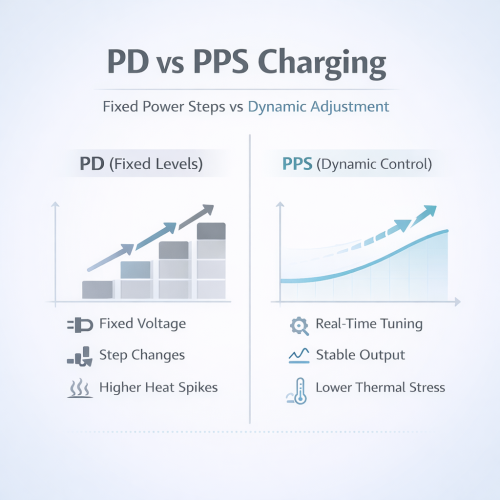
- PD vs PPS Explained Simply: Which One Is Better for Daily ChargingFeb 28,2026PD and PPS are both fast charging technologies, but they behave differently in daily use. This article explains how fixed power steps in PD compare with dynamic adjustment in PPS, and why PPS often delivers more stable charging with lower heat for everyday use.
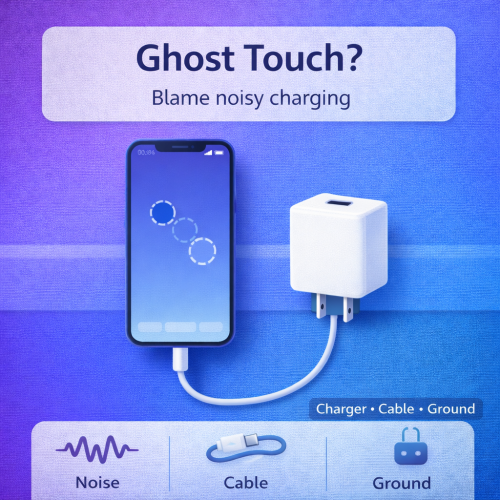
- Why Some Chargers Make Touchscreens Go CrazyFeb 2,2026Some chargers can cause “ghost touches” and erratic scrolling because of poor power quality. Electrical noise (ripple), weak isolation/filtering, unstable grounding, and voltage swings from low-quality cables can interfere with the touchscreen controller, especially as the phone warms up while charging. This article explains the real causes and gives quick tests to identify whether the charger, cable, or wall outlet is the culprit.
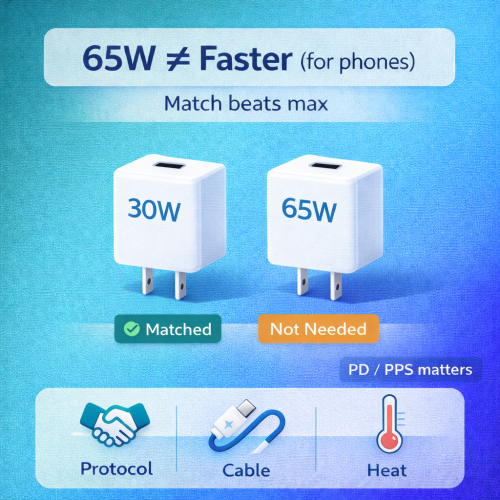
- Charger Wattage Myths: 65W Is Not Always Better for PhonesJan 27,2026A 65W charger is not automatically faster for phones because wattage is only a maximum capability. Real speed depends on whether the charger supports the phone’s preferred fast-charging protocol (USB-C PD or PD PPS), the cable’s current rating, the battery’s charging stage, and thermal throttling when the phone or charger gets hot. This article explains why some lower-watt chargers can feel faster in real use and how to choose a charger that stays stable and cool.
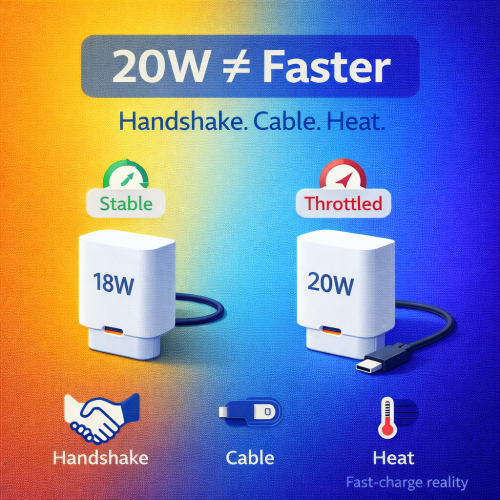
- Why 20W Feels Slower Than 18W: Fast-Charge Negotiation in Plain EnglishJan 23,2026A 20W charger can feel slower than 18W because wattage is only a maximum. Real fast-charging speed depends on protocol negotiation between the phone and charger, cable resistance, battery charge stage, and thermal throttling when the phone gets hot. This article explains the handshake logic and a quick test to identify the real bottleneck.
- Power Banks and Your Phone Battery: What You Need to KnowJan 22,2026This article addresses common concerns regarding the impact of power banks on smartphone battery health, debunking the myth that all power banks are detrimental. It emphasizes that high-quality, certified power banks are safe, incorporating advanced safety features like overcharge, over-current, short-circuit protection, and temperature control. The true culprits behind battery degradation are identified as low-quality, uncertified chargers, as well as user habits and environmental factors. Key
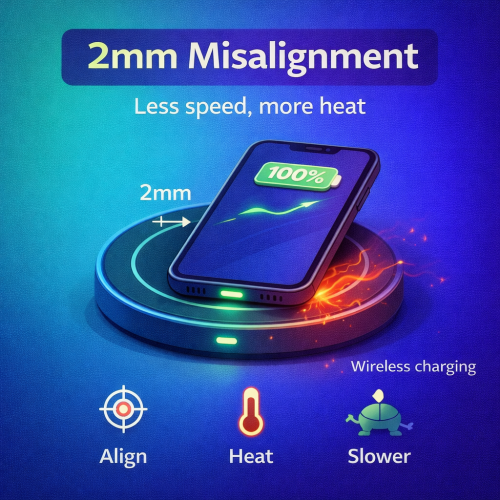
- Wireless Charging Misalignment: How a 2mm Shift Cuts SpeedJan 20,2026Wireless charging speed depends heavily on coil alignment, so even a small off-center shift can reduce coupling efficiency, increase heat, and trigger thermal throttling. This article explains why misalignment happens in daily use, how to spot it with a quick test, and simple fixes to keep wireless charging faster and more stable
- How Wireless MagSafe Power Banks Revolutionize On-the-Go ChargingJan 17,2026Wireless MagSafe power banks have emerged as a revolutionary solution for on-the-go charging, particularly for iPhone users, by integrating magnetic technology for a seamless and efficient experience. These devices eliminate the need for tangled cables, offering perfect alignment for optimal charging efficiency and speed, delivering up to 15W compared to traditional Qi chargers. They also incorporate advanced safety protocols, including protection against overheating, overcharging, and short-cir
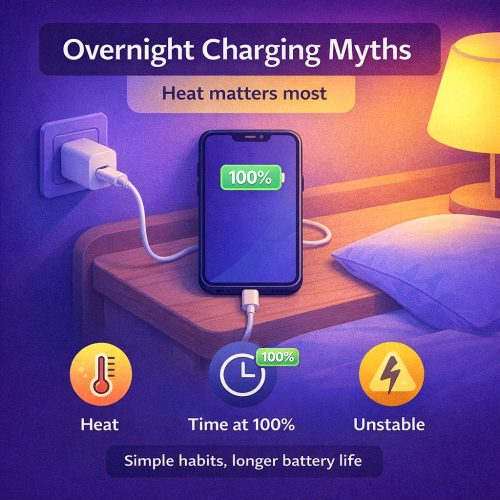
- Charging Overnight Myths: What Actually Damages Phone BatteriesJan 15,2026Overnight charging is not automatically harmful, because modern phones manage charging at full. Real battery damage usually comes from heat, long time spent near 100% charge, and unstable charging conditions caused by poor chargers, worn cables, or loose ports. This article explains what actually stresses lithium-ion batteries and the simplest habits to reduce overnight wear.
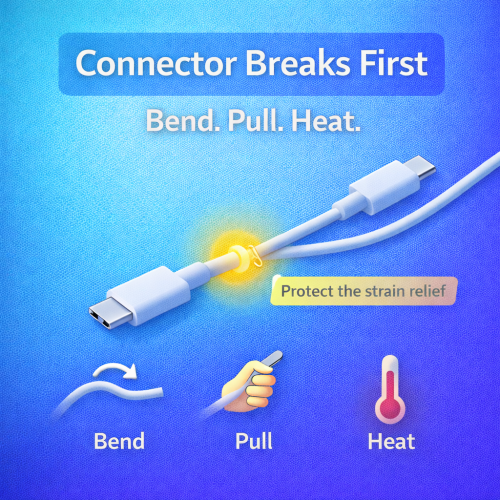
- Why Your Cable Breaks Near the Connector First (And How to Prevent It)Jan 13,2026Cables usually fail near the connector because repeated bending, pulling, and twisting concentrate stress where the internal conductors enter the plug, causing hidden strand breaks before any visible damage appears. This article explains the early warning signs, why heat and loose contacts accelerate failure, and simple habits that extend USB-C cable life.
Blog group
Are you looking for a reliable manufacturer of 3C digital products?
We can quickly provide customers with market analysis, technical support and customized services.Join Janon's distribution network and expand your business field!
Become a Janon dealer and achieve breakthrough success!
- Are you a company with extensive sales channels?
- Are you eager to cooperate with a partner who has an excellent supply chain and high-quality products?
- Do you want to stand out in the highly competitive 3C product market?
Please send your message to us
- *Name
- Phone
- *Title
- *Content
Subscribe to our latest news
Learn about our new arrivals, hot sales, and limited-time offers