
power bank
 Why a Charger Can Reach Rated Power but Still Deliver Uneven Real ChargingMar 23,2026A charger can reach its rated power and still deliver uneven real charging because rated wattage only shows maximum capability, not constant real-world output. Actual charging performance changes with protocol matching, cable quality, battery temperature, charging stage, and device-side power management.
- Why Battery Aging Affects Stability Before It Affects CapacityMar 20,2026Battery aging does not only reduce capacity over time. It often affects stability first by increasing internal resistance, weakening voltage behavior, and making charging and discharging less predictable, which is why an old battery may feel unstable before its total runtime becomes obviously poor.
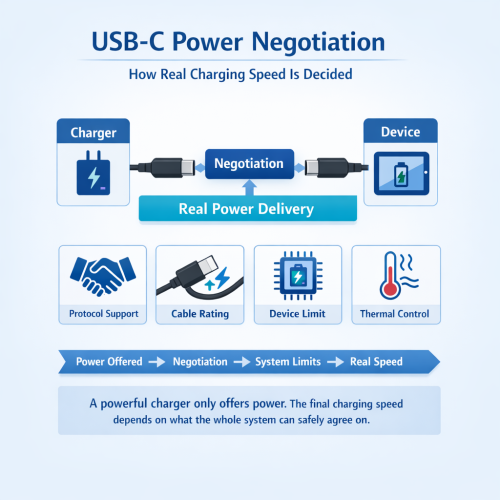
- How USB-C Charging Negotiation Decides Real Power DeliveryMar 19,2026USB-C charging speed is determined by negotiation, not by charger wattage alone. Real power delivery depends on protocol support, cable capability, device charging limits, battery temperature, and charging stage, which is why the same charger can produce different results on different devices.
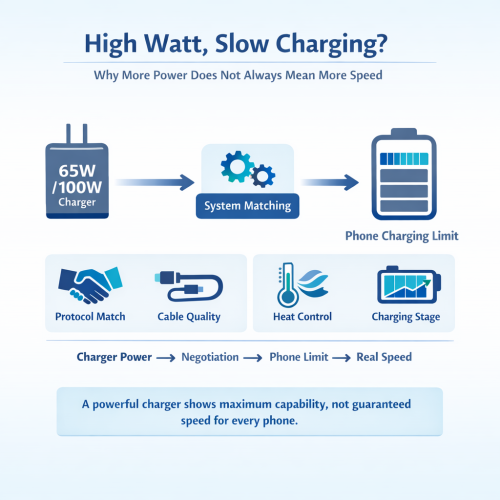
- Why Your Phone Still Charges Slowly With a High-Watt ChargerMar 18,2026A high-watt charger does not automatically guarantee faster charging. Real charging speed depends on the phone’s charging limit, protocol compatibility, cable quality, battery temperature, and current charging stage, so the whole charging system matters more than the wattage label alone.
- Why a Bigger Power Bank Does Not Always Mean Better Charging ExperienceMar 16,2026A bigger power bank does not always mean a better charging experience. While higher capacity offers more stored energy, real-world usability also depends on portability, output speed, charging efficiency, heat control, recharge time, and compatibility with your devices.
- Why Your Phone Battery Drops Faster in Cold WeatherMar 13,2026Phone batteries often drain faster in cold weather because low temperatures slow lithium battery chemistry, increase internal resistance, and cause voltage to drop more quickly under load. This can lead to rapid battery percentage loss, unstable battery readings, and even unexpected shutdowns, especially in older batteries.
- What Causes Battery Swelling in Everyday Phone UseMar 12,2026Battery swelling in everyday phone use is usually caused by a combination of chemical aging, heat, charging stress, and sometimes physical damage. As gas builds up inside a stressed battery cell over time, the battery expands, creating both performance and safety risks.
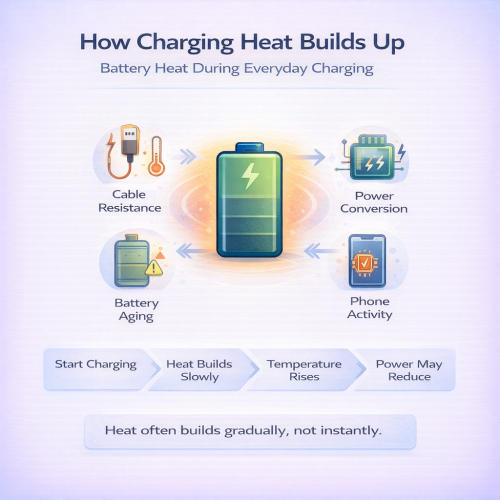
- How Battery Heat Builds Up During Everyday ChargingMar 11,2026Battery heat during everyday charging builds up gradually through electrical resistance, internal power conversion, phone activity, and battery aging. Even normal charging can generate heat over time, and repeated high temperatures may increase long-term battery wear.
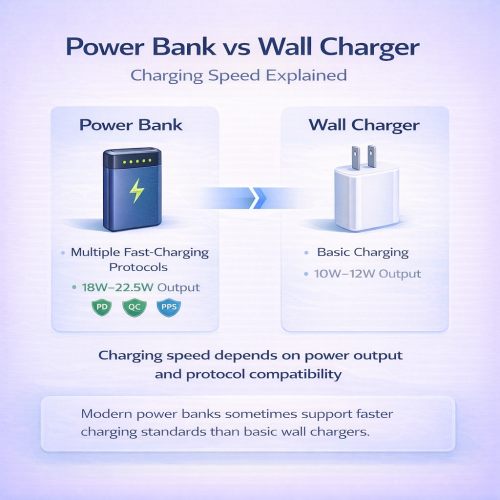
- Why Some Power Banks Charge Phones Faster Than Wall ChargersMar 10,2026Some power banks can charge smartphones faster than wall chargers because charging speed depends on power output, protocol compatibility, and device communication. Modern power banks often support multiple fast-charging standards and higher output levels, allowing them to deliver faster charging than basic wall chargers in certain situations.
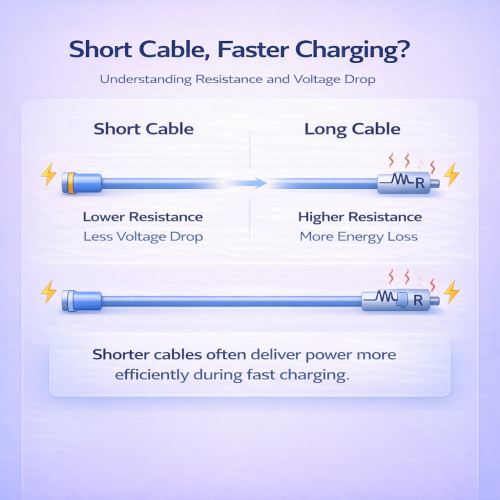
- Why Your Phone Charges Faster With a Short CableMar 9,2026Short charging cables can sometimes charge smartphones faster because they introduce less electrical resistance. Lower resistance reduces voltage drop and allows more stable power delivery from the charger to the device. However, cable quality, conductor thickness, and connector design also play important roles in fast charging performance.
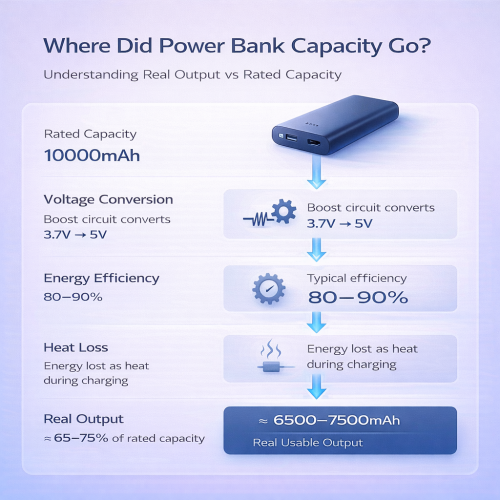
- Why Some Power Banks Lose Half Their Capacity in Real UseMar 5,2026This article explains why the real usable capacity of a power bank is often lower than its labeled capacity. Factors such as voltage conversion, circuit efficiency, cable resistance, and heat loss all reduce the energy that can actually be delivered to a smartphone during charging.
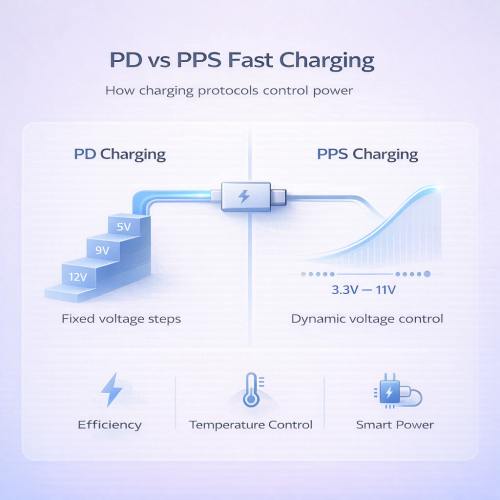
- PD vs PPS Fast Charging: What Is the Real DifferenceMar 4,2026This article explains the difference between PD and PPS fast charging technologies. It highlights how PD uses fixed voltage steps while PPS enables dynamic voltage adjustment, which can improve charging efficiency and reduce heat in compatible devices.




Blog group

Are you looking for a reliable manufacturer of 3C digital products?
We can quickly provide customers with market analysis, technical support and customized services.Join Janon's distribution network and expand your business field!
Become a Janon dealer and achieve breakthrough success!
- Are you a company with extensive sales channels?
- Are you eager to cooperate with a partner who has an excellent supply chain and high-quality products?
- Do you want to stand out in the highly competitive 3C product market?
Please send your message to us
- *Name
- Phone
- *Title
- *Content
Subscribe to our latest news
Learn about our new arrivals, hot sales, and limited-time offers